- Home
- Features
Core Features
Customization & Scalability
- Pricing
- Demo Request
- Live Session
- Account
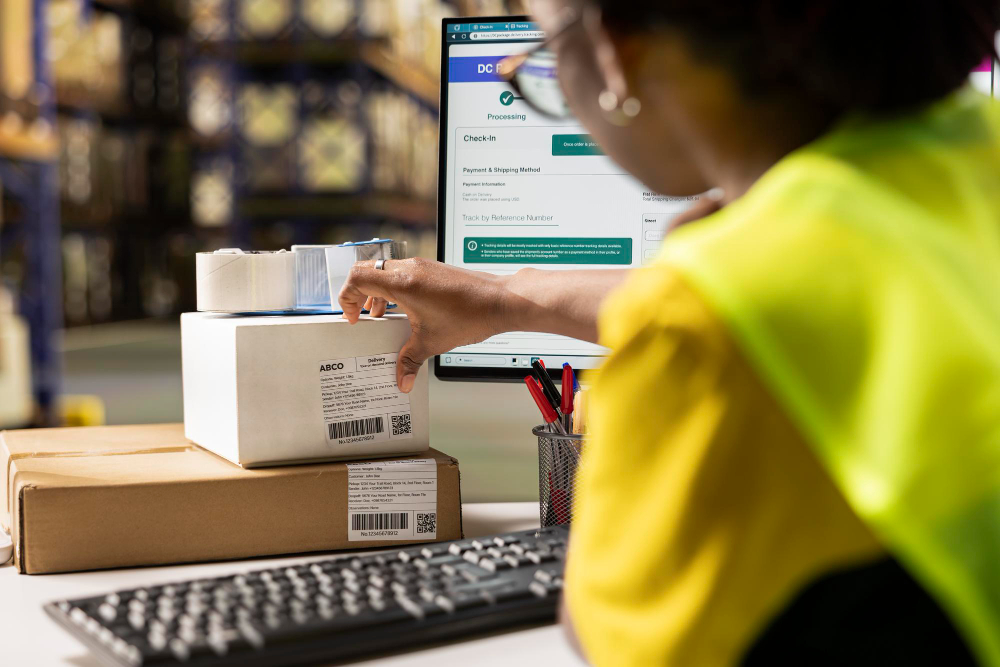
Dispatch is the operational heartbeat of any courier business. Every day, dispatchers receive orders, assign drivers, sequence stops, manage exceptions, and communicate with customers — often simultaneously, under time pressure, with limited visibility into what's actually happening on the road.
Courier dispatch software replaces the most manual, error-prone parts of that workflow with automated assignment, optimized routing, real-time tracking, and systematic exception handling. This guide covers everything logistics companies need to know about evaluating and implementing dispatch software in 2025.

Dispatch software manages the full lifecycle of a delivery, from order intake to delivery confirmation:
Receive orders from multiple sources (API, CSV upload, manual entry, e-commerce integrations)
Validate addresses, check capacity, flag issues before dispatch
Assign orders to drivers based on zone, capacity, and priority rules
Generate optimized multi-stop routes for each driver
Account for time windows, vehicle capacity, and traffic patterns
Re-optimize automatically when conditions change
Push routes to driver mobile apps
Send real-time notifications and alerts
Handle driver check-ins, stop completions, and exception reports
Automated pre-delivery notifications (SMS, WhatsApp, email)
Live tracking links
Delivery confirmation with ePOD evidence
Live dispatcher dashboard showing all drivers and delivery status
Exception alerts (delayed driver, failed delivery, customer not available)
End-of-day reporting on performance metrics
Small courier operations often start with WhatsApp groups, Excel sheets, and phone calls. This works for 2–3 drivers. It breaks at 8–10.
The problems compound with scale:
Routing by memory or gut Human dispatchers routing 400+ stops across 10 drivers can't process all the variables a computer can. The result: suboptimal sequences, unbalanced driver loads, preventable overtime.
Communication lag "Call me when you're done with stop 15" doesn't work when you have 12 drivers all needing guidance. Communication bottlenecks create delays that cascade through the entire route.
No systematic exception handling When a driver can't access a gated community, or a customer isn't home, manual systems rely on the driver calling the dispatcher, who then manually finds a solution. Software handles most exceptions with predefined workflows.
Zero visibility until drivers return Without tracking, dispatchers don't know delivery status until drivers either call in or return to the depot. Customer inquiries can't be answered in real time.
At 5 drivers and 200 deliveries/day, manual systems are painful. At 15 drivers and 800 deliveries/day, they're operational failures.
6:00am — Dispatcher receives 300 orders from e-commerce system (manually downloaded to spreadsheet) 6:00–8:30am — Dispatcher manually assigns orders to drivers, estimates routes, creates WhatsApp messages for each driver with their stop list 8:30am — Drivers depart with unoptimized routes Throughout day — Dispatcher fields 40+ calls: "where do I go next?", "customer not home, what do I do?", "can I skip this one?", "traffic is bad on Sheikh Zayed" End of day — Dispatcher collects paper PODs from returning drivers, manually reconciles COD
5:45am — Orders auto-imported from e-commerce via API integration 6:00am — Dispatcher reviews automatically generated optimized routes, approves with minor adjustments 6:15am — Routes pushed to all 20 driver apps simultaneously Throughout day — Dispatcher monitors live dashboard; software handles customer notifications; exceptions flagged automatically; dispatcher handles 8 edge cases total End of day — All ePOD captured automatically; COD reconciliation report auto-generated
Time savings: 3+ hours of dispatcher time per day. Route efficiency: 25% fewer miles. Dispatcher call volume: -80%.
Is it the morning routing process? Exception handling? COD reconciliation? Customer communication? Different platforms excel in different areas.
What systems does dispatch software need to integrate with?
E-commerce platforms (Shopify, WooCommerce, custom)
Warehouse management system
Accounting/invoicing software
Customer communication tools
Integration complexity determines implementation effort. Platforms with pre-built connectors to your existing tools are significantly faster to deploy.
Two weeks of real operations with real data. Measure:
Dispatcher time on routing and exception handling
Route miles per driver per day
Failed delivery rate
Driver adoption (are they actually using the app for every stop?)
Monthly software subscription is visible. Hidden costs include:
Implementation and setup time
Driver training (count actual hours, not days)
Integration development for custom connections
Ongoing support quality (a slow support team costs you in daily operational friction)
MENA and Africa operations need dispatch software built for regional realities:
GPS-pin addressing Dispatchers must be able to create orders and assign drivers to GPS-pin locations, not just formatted text addresses. When half your deliveries are to compounds, informal settlements, or rural areas without addresses, pin-based dispatch is essential.
WhatsApp dispatch notifications Driver communication via WhatsApp is standard in MENA. Dispatch software should support WhatsApp notifications for route assignment, and ideally for customer pre-delivery alerts too.
Arabic interface For Arabic-speaking dispatchers, an RTL Arabic interface reduces friction and errors in a high-pressure environment.
COD workflow Non-negotiable for MENA/Africa operations. COD management must be a first-class feature in the dispatch workflow, not an afterthought.
iCargos was built with these requirements as core features. It serves courier operations across the GCC, North Africa, East Africa, and Southeast Asia.
iCargos © Copyright 2026. All Rights Reserved. - Powered By IT Vision Pvt. Ltd.